
I was kicked out of pre-school. I do remember being at pre-school. Everyone was napping, but I was sitting by one of the playsets they had along the wall. I remember my mom walking in and telling me we were going home, but I wanted to stay and play some more. I didn't realize that it was the last time I would be at that pre-school. I remember when we walked out, my mom was angry, saying, “There is nothing wrong with my son. He marches to the beat of his own drummer.”
It was a line my mother would repeat throughout my childhood when others, mostly teachers, would say that I didn't want to do what the others were doing. I marched to the beat of my own drummer. I liked how that sounded. I was unique, and even at a young age, I was my own person.
The First Time I Got Kicked Out
The problem was that my mom wound up having to say it a lot. Through the years, I wound up learning to dread parent-teacher conferences. Not because I was not handling the schoolwork, I was actually handling the work quite well. However, even though my grades were good, the reports my parents got from teachers were never great.
“He doesn't seem to pay attention in class.”
“He's a daydreamer.”
“He gets bored easily.”
“He has a hard time staying on task.”
The teachers were not usually mean about it since I never fell behind on my work and did well on tests. Teachers were genuinely surprised to know that despite “spending all day staring out the window,” I was actually listening and taking everything in.
When I say they were usually not mean, it is because my 3rd grade teacher told my parents that if I don't start paying attention in class, “he will never amount to anything.”
The “Problem” with Daydreaming
I was born in 1970, so most of these comments were made in the late '70s in first, second, and third grade at a time when ADHD was all but completely unknown to teachers at the time. The only time it was really acknowledged was when a kid was hyperactive.
The form of ADHD that I have, Inattentive Type, was not really defined until 1994, when I was already a year out of college, so my issues went undiagnosed, and I grew up with all these comments from teachers. While my mom always defended me to my teachers, when we got home, I was confronted with a pleading mother saying, “Please just try to pay more attention in school.”
Despite not being able to pay attention in class, starting in 4th grade, I was in the class called “SP” for Special Pupils. Despite the word Special, it was not a Special Needs class. It was a class they put the smarter kids in and taught at a slightly accelerated pace, which was fine with me. I did well, though my grades were never the top grades because I was not completely following the rules they set. I often did stare out of the window, but that was how I listened. I took everything in. It was easier to listen when I wasn't looking directly at the teacher.
When I tried to look at the teacher, my mind was so focused on maintaining eye contact that I couldn't hear anything that was being said. They never got that. If I wasn't looking, I must not have been paying attention. They had no idea that it was the exact opposite. If I was looking, I had no idea what was going on. At the time, I couldn't look and listen at the same time.
The Gifted Program That Didn't Get Me
In Middle School, or Junior High School, I went to a public school that was for “the gifted and talented.” I was apparently on the “gifted side.” We took classes a year ahead of others. In 7th grade, we took 8th-grade math and science. In 8th grade, we were allowed to take 9th grade math and science and even got the high school credit for the 9th grade classes we took. As a part of the “SP” program, we also got extra homework to do. Yay.
Well, in the 8th grade, I was told that despite how well I was doing academically, my grades no longer warranted being in the "SP" program. My grades went down due to the perception that I was not paying attention in class, and a couple of teachers I had in 8th grade didn't like that. I remember there was one particular science test I didn't do well on, but they wouldn't throw someone out of the program for one bad test. So, even though my grades were good, except for that one test, I was kicked out of the “SP” program.
When I say that my grades suffered because of the perception I wasn't paying attention, I was constantly being told that I needed to pay attention more in class (a running theme since first grade), and due to this, I had 2 teachers, my English and Science teachers, who gave me poor marks for class participation and while still passing me, lowered my grades enough that along with that one bad test, my average fell below the threshold to remain in the program. It was a while ago, but I believe that the threshold was either an 80 or an 85. I believe it was an 85, since I don't remember my average ever being in the 70s.
That sounds bad, but since I was already in the math and science classes, I stayed in those classes. They weren't going to move me halfway through the year to the other class since I had already passed those classes the year before. I kept getting the class benefits of being in “SP,” but since I wasn't technically in the program any longer, I didn't get the extra homework. Believe me when I say it was a total WIN/WIN.
Graduating but Never Good Enough
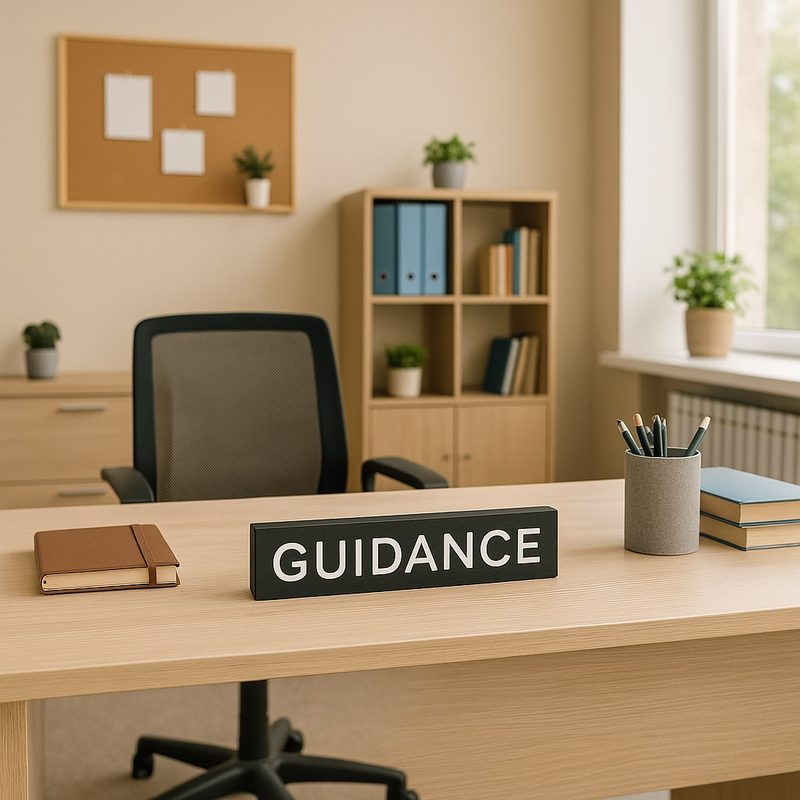
I then went to John Dewey High School. At the time, it was considered an experimental school, and whatever the experiment was, it really played to my strengths. I loved High School, and I did pretty well. For the purposes of what I am talking about here, most of High School was unremarkable, until the rankings came out when I was a senior. In a class of 820, I graduated 69th. Well within the top 10% of the class. I was called into the office of my guidance counselor, and I was surprised to learn I had a guidance counselor since, for all my time in high school, I never once had any meetings with any guidance counselor at all. Not once. Ever.
My guidance counselor said, and I can hear it like it happened yesterday… “You are the only person in the top 10% of the class that I will say this to. I am very disappointed. You should have been top 10.”
I knew where I was going to college already, and since it was in the City University of New York, to get into a 4-year school, all I needed was to pass a reading and writing exam, which I did, get at least something like 920 on my SAT, which I did, and graduate in the top 10% of my class, which I did. Mission accomplished. But I had to sit there and listen to this guidance counselor tell me how disappointed he was in me for graduating in the top 10%.
I laughed it off at the time, as I did with everything else teachers ever said about me.
I march to the beat of my own drummer. Screw all of you.
However, all of it—from being kicked out of preschool to being told I would never amount to anything to being told I was a daydreamer to getting kicked out of “SP” and then the final insult of “good is not good enough” with where I landed in my graduating class in High School—caused a trauma that would begin to manifest itself in ways I never understood and never attributed to what my teachers said about me.
Too Sensitive? Or Just Tired of Failing Someone's Test?
At some point along the way, another criticism started to creep into the lexicon of things that teachers, professors, family, and eventually managers and bosses would say: “You are being way too sensitive.”
Two things started to emerge soon after high school: 1 – I became a “people pleaser,” and 2 – I started to react badly to criticism.
These two things are related. I became a “people pleaser” because if anyone was disappointed by anything I did, was involved in, or was even adjacent to, I took it personally as a failure. I mean, if graduating in the top 10% of my class wasn't good enough, then what was? The bar was set at a height that was impossible to achieve.
As for criticism, I took any level of criticism personally. I would react as if any remarks made about anything meant that person hated me and everything about me. If the criticism came from my mom or dad or family, a manager at a job, or a woman I was dating, then it meant I was no longer loved, or I was about to get fired, or they were going to break up with me. There was no middle ground at all. My brain immediately went to the worst-case scenario. And heaven forbid someone told me they wanted to speak with me. That meant the worst possible thing was going to happen. If I was told by someone they wanted to speak with me, but that meeting didn't happen the same day, I did not sleep well, or at all, until the meeting. I lived in constant fear and dread of being told once again that I was not good enough.
Finding the Name: RSD
This may seem like a drastic jump from school to being overly sensitive, but being sensitive about things as an adult could be directly tracked back to things like being thrown out of pre-school for not doing what I was told I should be doing, or being told I wasn't going to amount to anything because I appeared to be daydreaming instead of paying attention and getting kicked out of the “SP” program for not passing how they wanted me to pass my classes and being told that good was not nearly good enough, and that I was the only person being measured against that particular yardstick.
Now that I was on my own and earning money and trying to have relationships, every criticism was not just a note from a teacher to my parent, it became a reflection of who I was as a person and if you didn't like the smallest thing about how I did something, it must mean I was going to get kicked out of something else. Every negative word became another trip to the guidance counselor's office to be told that I failed, not because I objectively didn't do well, but only because of who I was as a person. I should have done better. I should have known better. If only I could pay attention more then maybe these people wouldn't hate me so much.
It wasn't until much later, and by that, I mean probably a couple of months ago when I heard about a fallout from growing up with ADHD called RSD or Rejection Sensitivity Dysphoria.
When I heard that Rejection Sensitivity was a thing, I was shocked, and I read what I could about it and I was so surprised to learn that there are so many people out there who have stories quite similar to mine and also wound up being overly sensitive to the slightest bit of criticism.
Still Learning, Still Marching
All I can say about this is that since I was now able to put a name to what I have been dealing with for the entire adult life, I was able to really look back on it, and look back at the things in my childhood through High School that had caused me to build this wall of protection around myself and why I behaved as I did and why I react so strongly to even the smallest things.
Now that I know what it is, I am working on it. I know that criticism is not always a bad thing. When it's constructive, it could be a good thing. I knew this intellectually, but there was never anything like constructive criticism in my eyes, it was all a reflection on me as a person and who I was.
I would love to say that I have cracked the code to RSD, but I haven't. As of now, all I have is the knowledge of what it is, why it is part of my personality, and how I need to reframe criticism. As with anything else with ADHD, making these changes to adjust for new information is the hardest thing in the world, but I am working on it.